



Is the NT-CP1 AM5/4 electrically conductive?
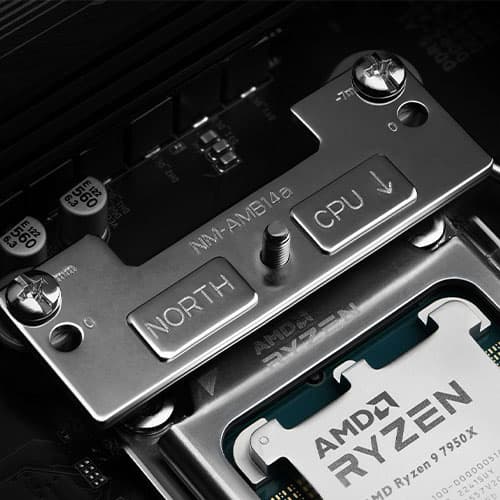
The contact surfaces of a factory-new NT-CP1 AM5/4 pad are covered by a nanoscale polymer coating that is electrically non-conductive. This adds extra peace of mind in case the pad should slip during installation and the contact surface touches current-carrying parts. That said, it must be stressed that both the carbon nanotubes underneath the thin polymer layer and the aluminium backbone of the pad are electrically conductive. Therefore, please note the following points:
- The polymer coating may be penetrated in case the pad is installed in such a way that it is compressed between the heatsink and current-carrying parts such as SMDs. Therefore, whenever using the pad for applications other than AM5 or AM4 desktop processors (at your own risk, see this FAQ for details), please make sure to insulate current-carrying parts that may be overlapped by the pad. The same penetration of the polymer layer may also occur when measuring surface resistance on the pad using electrical probes.
- The polymer coating does not cover the aluminium backbone at the edges of the pad, so the edges are electrically conductive.
- During use, the polymer coating liquefies and may partially expose the electrically conductive carbon nanotubes. This is why appropriate care is advised when removing used pads or in case the pads are used in applications where they overlap SMDs or other current-carrying parts (at your own risk, see this FAQ for details).
The main safety benefit of the polymer coating is not to make the pad fully non-conductive but to reduce slipping, which greatly lowers the probability of a shorting event or misaligned installation.

相关问题解答
相关文章
想了解更多关于这个话题的信息吗?请浏览相关文章和资源。
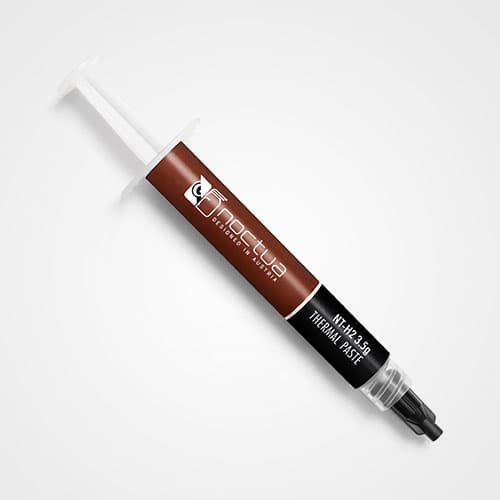
Performance comparison NT-H1 vs. NT-H2
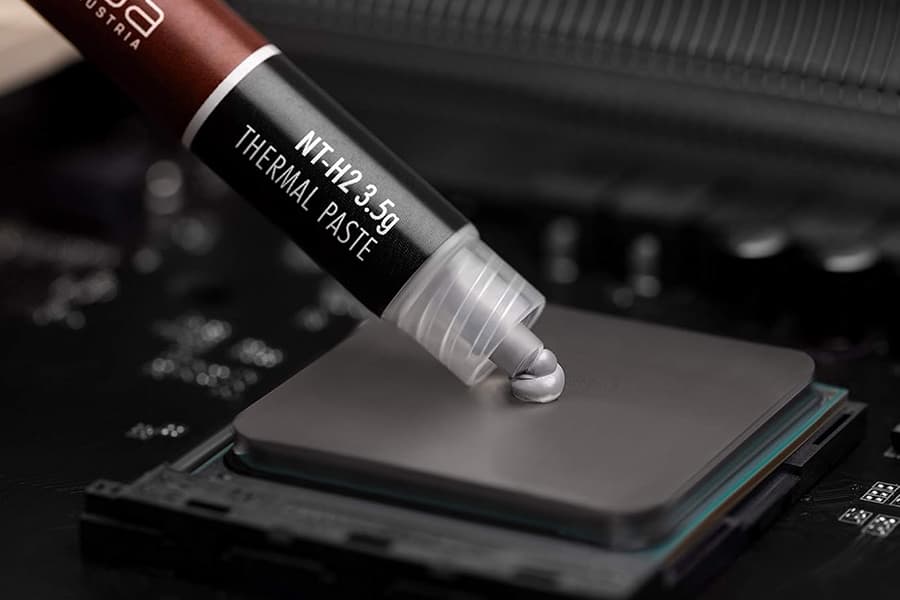
The NT-H2 thermal paste further improves on the award-winning NT-H1. But how much of a difference in performance can you expect to see?
How to speed up the activation phase of the NT-CP1 thermal pad using automated Prime95 runs
The NT-CP1 thermal pad does not require any manual activation. However, it is possible to speed up the activation phase through dedicated thermal cycling...

NT-CP1: Performance characteristics and technical background
The Carbice® NT-CP1 carbon nanotube thermal pad improves over thousands of thermal cycles instead of degrading like pastes, ideal for long-lasting, maintenance-free use.