


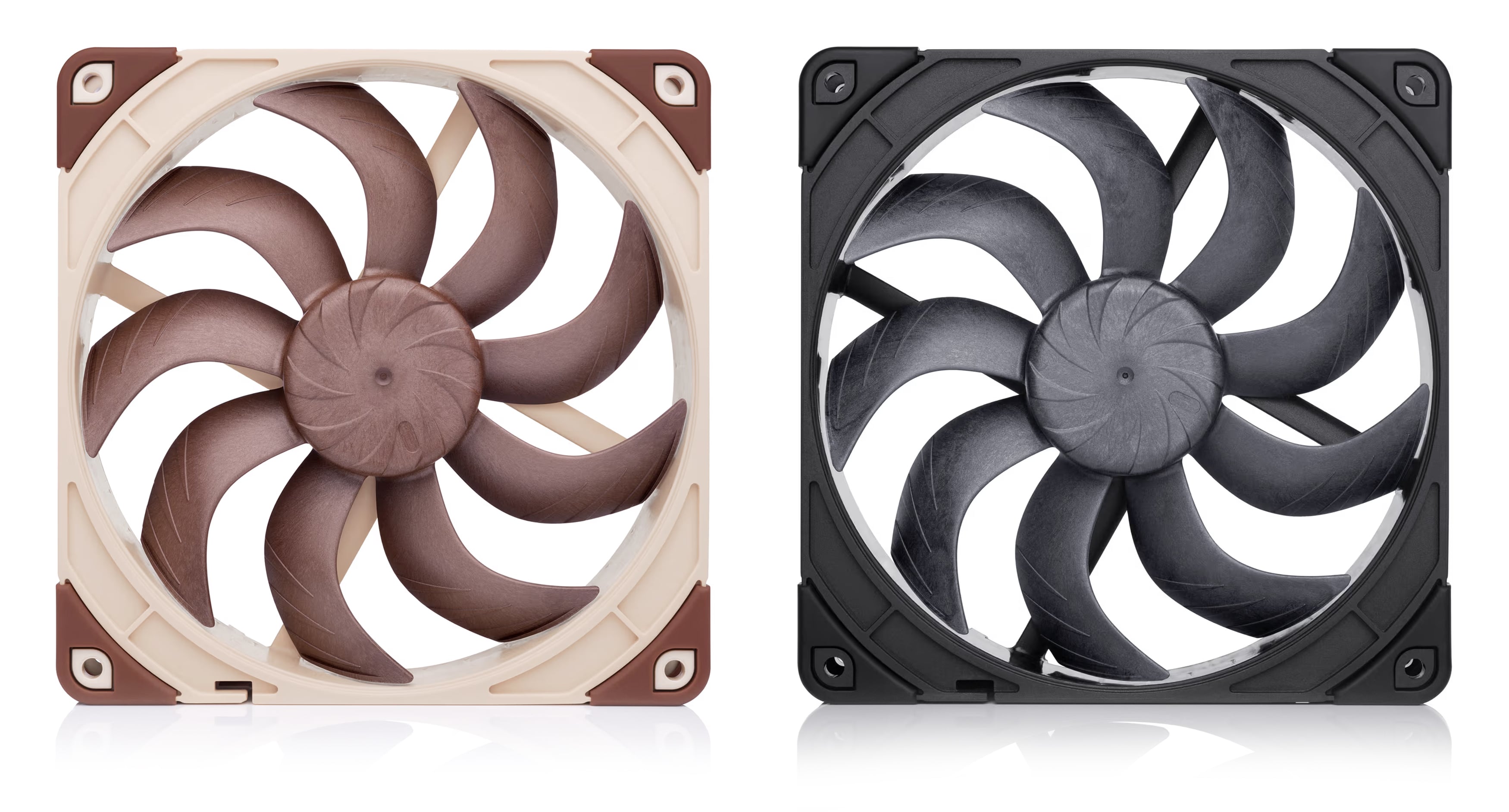
People often wonder why the chromax.black versions of our fans take longer to launch after the classic colours. In a nutshell, the reason is that this is less like painting a wooden fence, which is easy, and more like changing the colour of a carbon-fibre Formula 1 part, which requires re-calculating the weight, strength and aerodynamics.
Before we dive in, we need to understand how PC fans are injection moulded and produced. At its simplest, injection moulding involves melting plastic and forcing it into a steel mould, also called “tooling”, to cool down and harden into a specific shape.
However, for high-precision engineering, this is less like making ice cubes and more like baking a complex soufflé where every degree of temperature and milligram of ingredients matters. The flow rate, cooling time, and pressure must be perfectly balanced to ensure the plastic crystallises, cools correctly, and holds its structural integrity and dimensional precision. When you introduce a new variable, like colouring pigments, that delicate balance is disrupted.
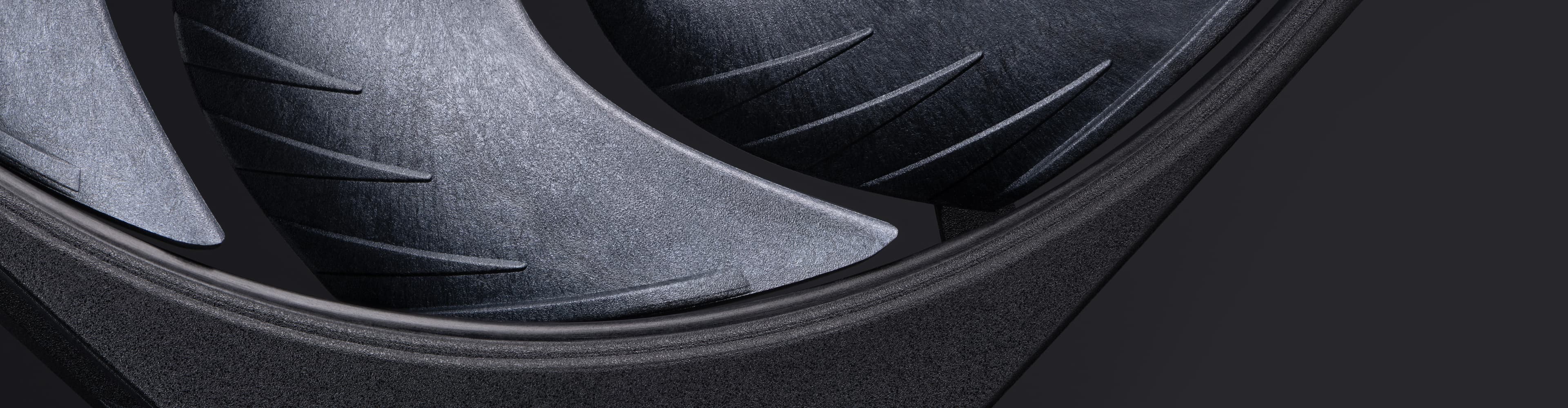
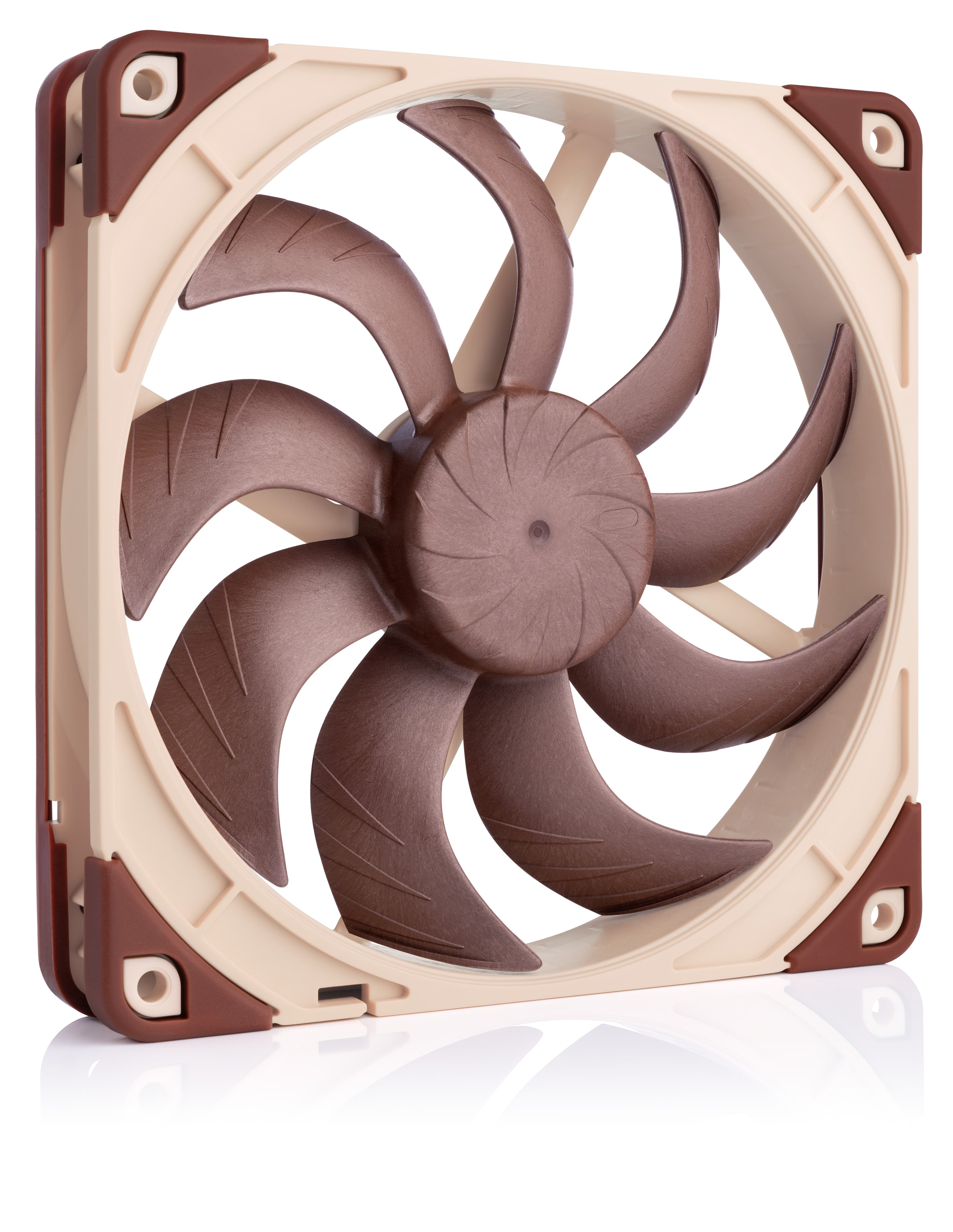
While this is generally much less of a problem for fan designs that utilise relatively large tolerances and standard engineering plastics such as fibreglass reinforced PBT or PA, it becomes highly critical when building fans with tighter tolerances using more advanced polymers such as Sterrox® LCP. With our NF-A12x25, NF-A12x25 G2 and NF-A14x25 G2 fans that feature impellers made of this material, we have implemented a tip clearance of only 0.5mm (120mm models) or 0.7mm (140mm models) in order to minimise leak flows through the gap between impeller and frame.
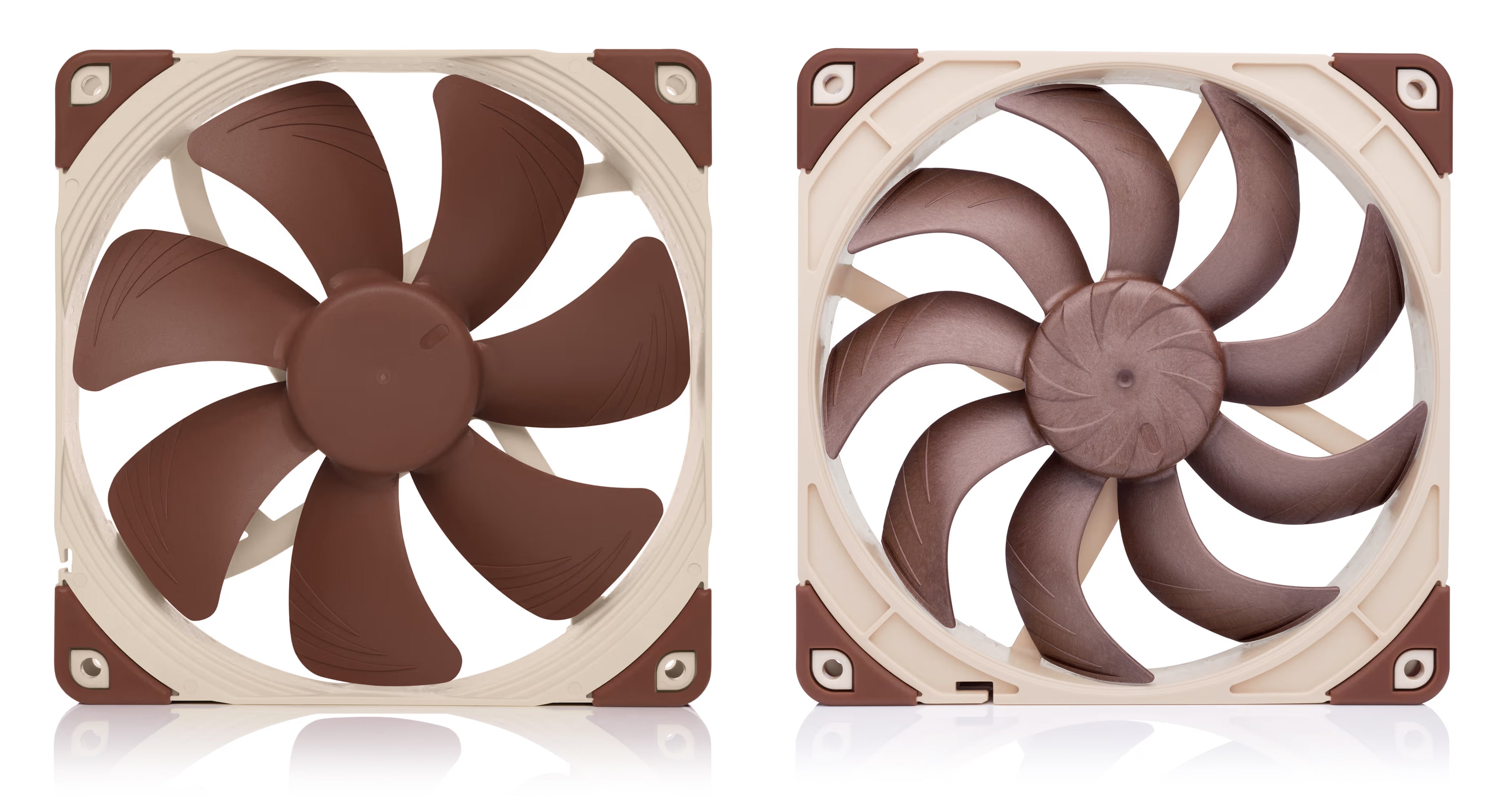
Achieving such small tip clearances is essentially at the absolute limit of what injection moulding can consistently reproduce. At this extreme tolerance level, even minor process variations and material-related factors, such as the addition of colour pigments, become highly relevant. Their influence on the dimensional precision and stability of the fan blade may be minute, but if the tolerance is only a few tenths of a millimetre, being off by a tenth or two suddenly becomes a problem.
Colour pigments impact the injection moulding of these high-precision fans because the pigment particles behave like tiny solid fillers inside the melt. Their size, surface area, and thermal behaviour directly influence how the polymer flows into the mould, as well as how it cools and solidifies. Black pigments, which are typically carbon black, behave very differently from the beige or brown metal-oxide pigments used in our standard fans. Carbon black particles are much smaller and have a significantly higher total surface area, resulting in stronger interactions with the polymer melt. While beige and brown metal-oxide pigments are larger and have a weaker effect, carbon black alters the melt viscosity, heat absorption, and crystallisation behaviour more significantly.
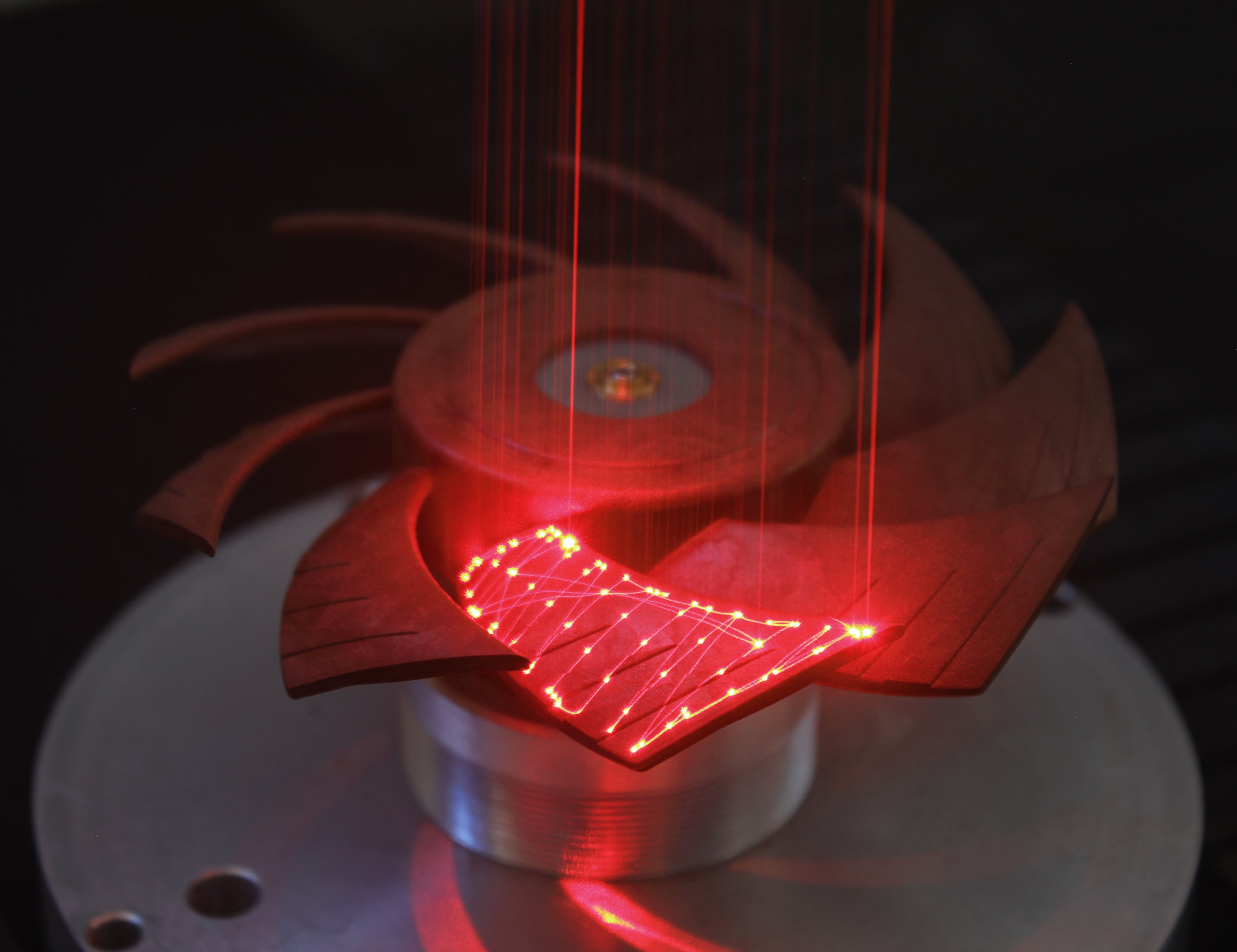
When crafting the very first mould for a new high-performance fan, multiple tuning iterations are required until the geometry, cooling, gating, and moulding parameters are perfectly stabilised. In case we run into severe issues, this may even require starting from scratch. Regardless of whether it’s regular tuning iterations or complete redesigns, these hard-earned lessons feed directly into the design of the new mould for the black version, even though it always has to be further adjusted to account for the different moulding behaviour. Since these tuning iterations and, even more so, the worst case situation where the tooling has to be changed so significantly that it has to be redone from scratch, are time-consuming and costly, creating the toolings for the black versions at the same time as those for the regular versions would introduce significant extra cost and risk. To avoid this, we only initiate the production of the toolings for black versions after the mass production of the beige and brown parts is already running smoothly and stably.
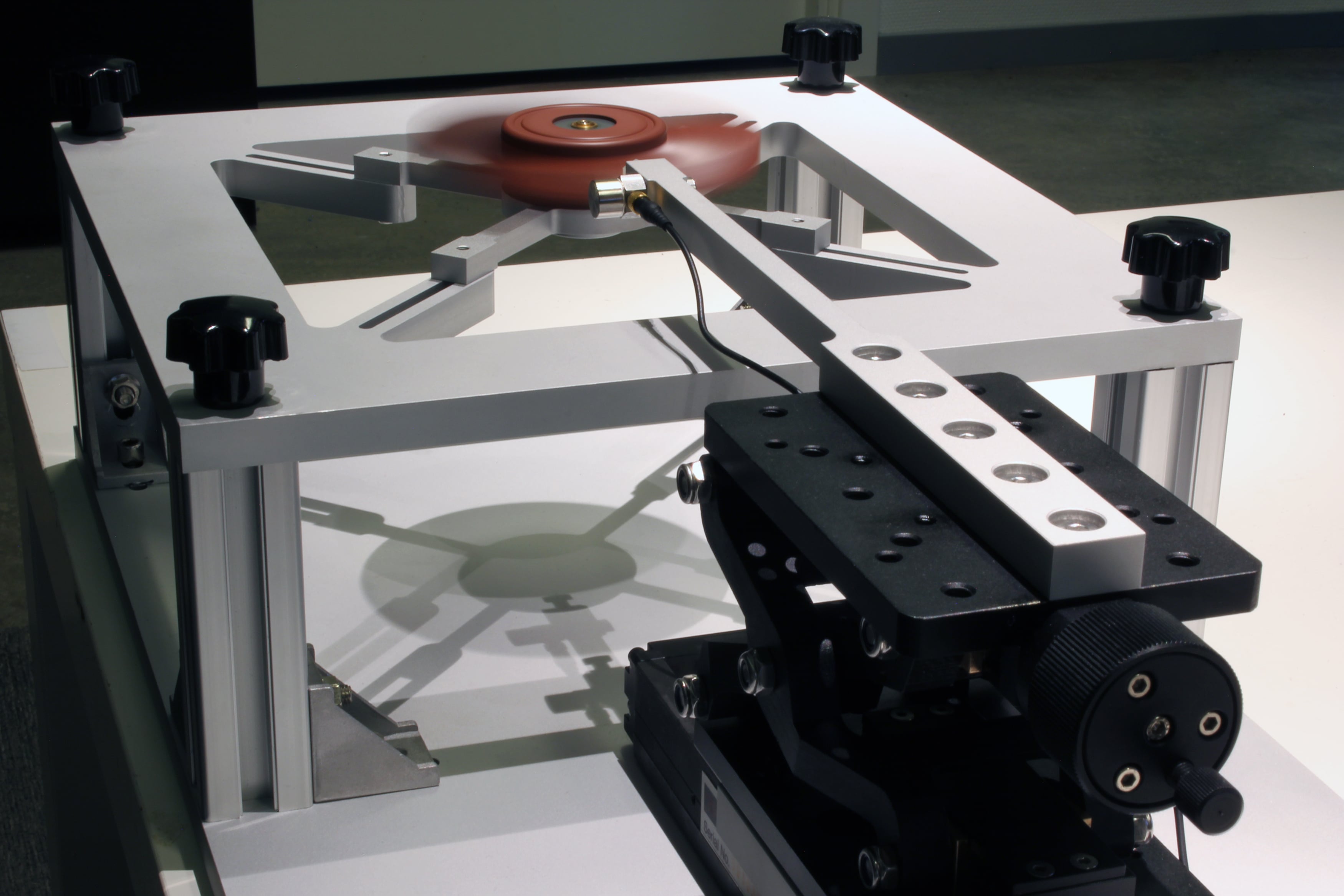
On top of the complex process of creating and tuning the moulds, our approval and validation process for new fans includes a rigorous, long-term high-temperature test. This ensures that our fans will deliver top-tier performance far beyond their 6-year warranty, but the test alone requires several months to run, with additional time needed for preparation and evaluation. Since this validation process must be repeated for the black versions, it introduces a minimum delay of around 6 months between the release of the brown and beige fans and their chromax.black counterparts. As soon as we have to go through some iterations of mould tuning, the delay will be longer, and if we have to re-run the validation tests, we’re already looking at a minimum delay of 12 months.
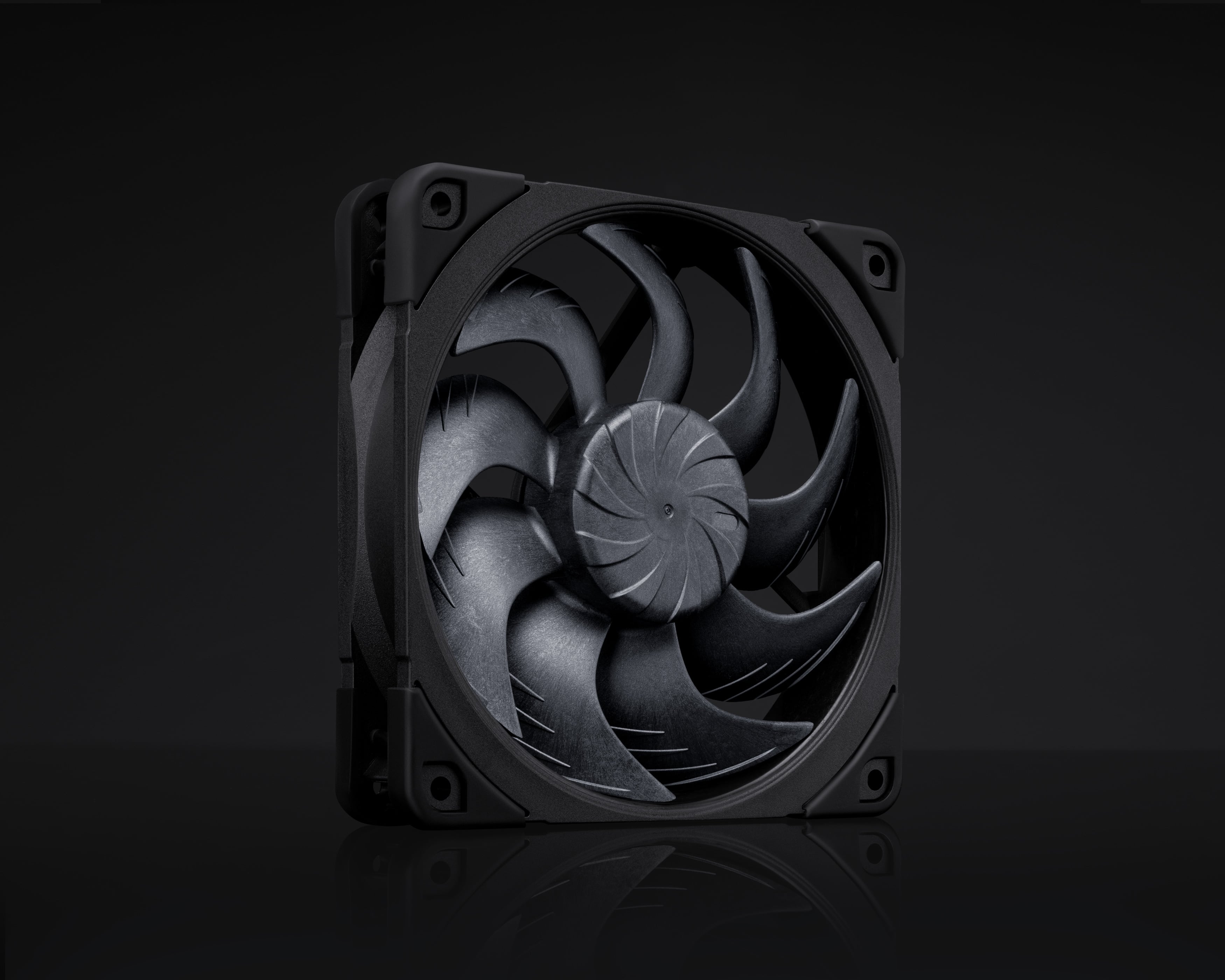
At the time of writing, we’re just about to release the chromax.black version of the NF-A12x25 G2 – around 10 months after the release of the regular beige and brown version. Hopefully, the insights we’ve shared in this post help to explain that this is actually pretty close to as fast as possible.
PS: We’ve only covered delays that are caused by the tooling creation and validation process in this blog post. However, there is a wide range of other factors such as the availability of other components, production capacity restrictions or logistical issues that can play a role as well. For example, during the three-year gap that we had between the regular and black version of the first-generation NF-A12x25, we were in the midst of the global pandemic and dealing with a highly challenging combination of strong demand, disrupted supply chains and logistical havoc, which caused delays that went far beyond tooling-related issues.
Mentioned products
Explore the products featured in this article.
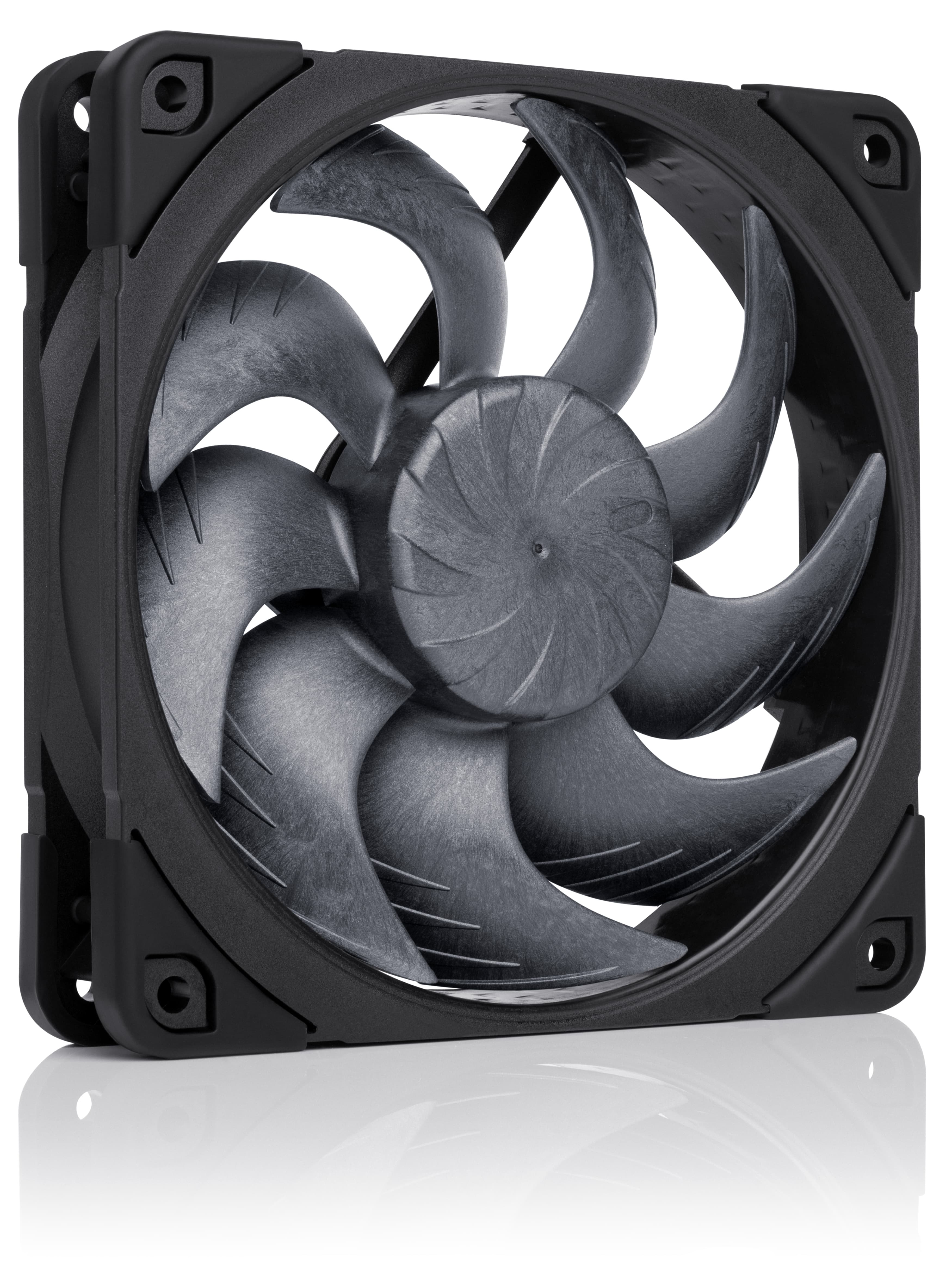
NF-A12x25 G2 PWM chromax.black
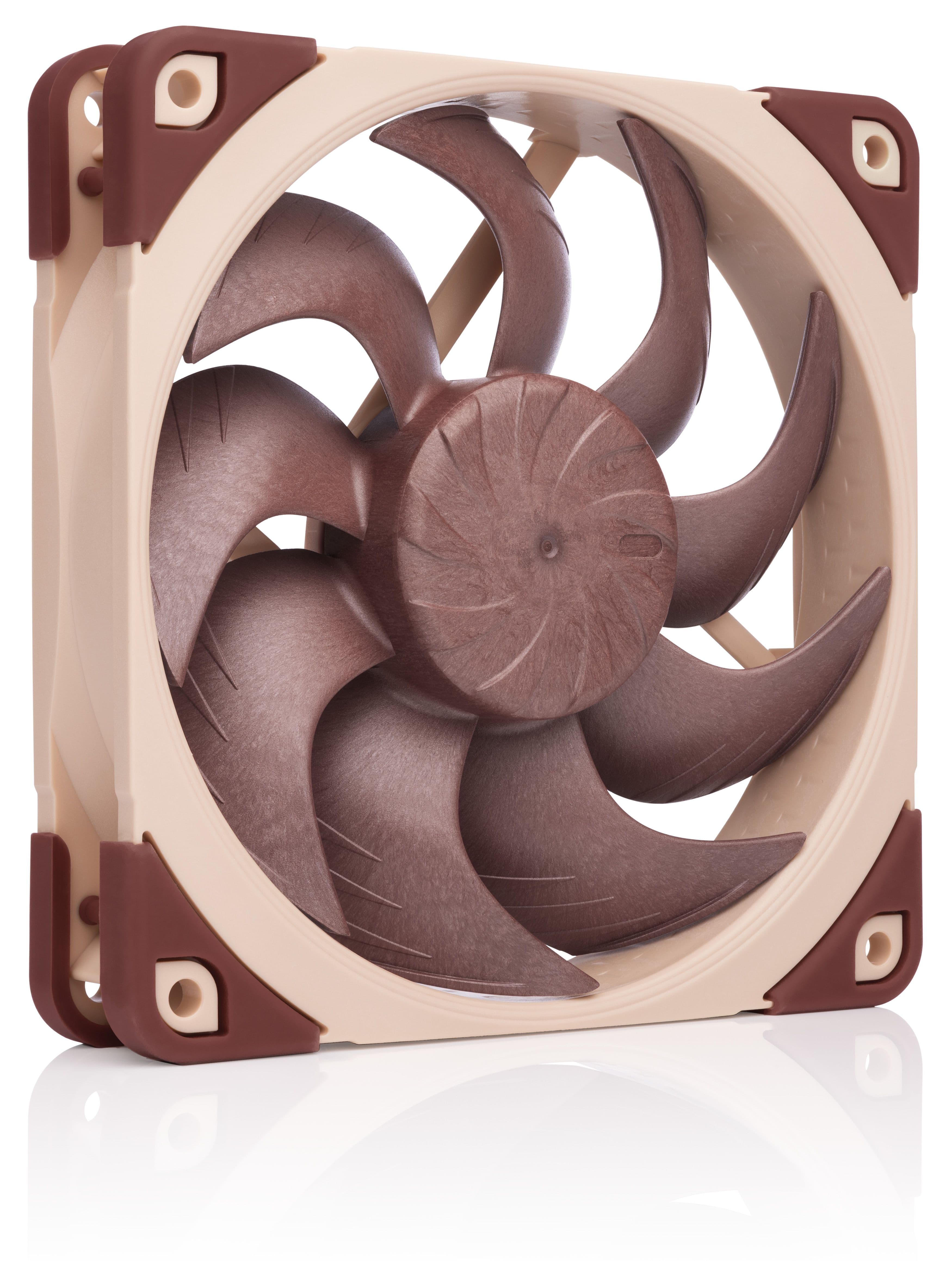
NF-A12x25 G2 PWM
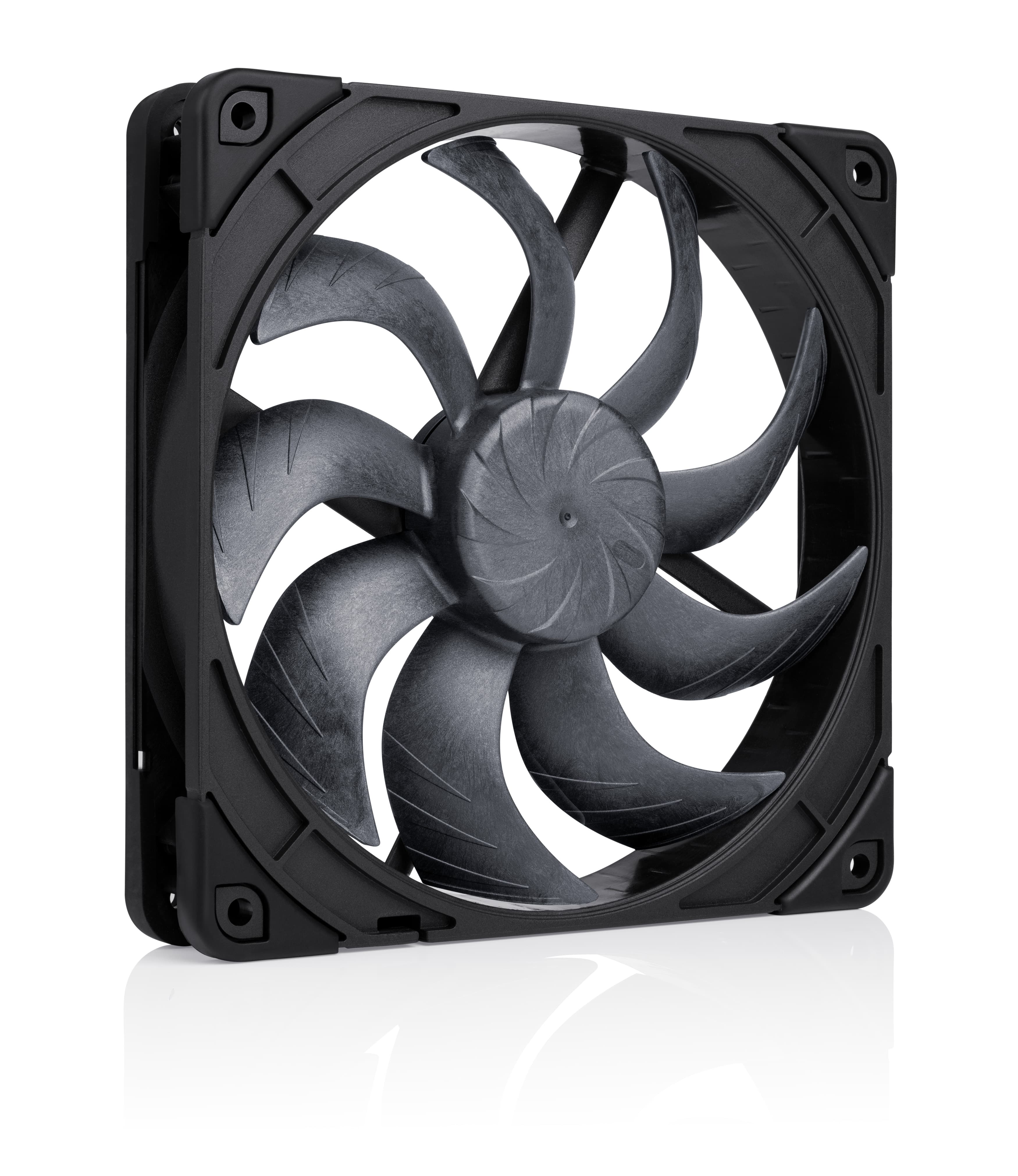
NF-A14x25 G2 PWM chromax.black
NF-A14x25 G2 PWM
Related articles
Want to know more on this topic? Explore relevant articles and resources.
Understanding Noctua’s product naming scheme
03/12/2025
Learn how to navigate the naming scheme of Noctua products by understanding what the letter and number designators mean.
Our G2 fans’ aerodynamic innovations: keys to superior performance
Building on the technological innovations of the NF-A12x25, the G2 models represent a further refined, second-generation implementation of this design approach.
Sterrox® liquid-crystal polymer (LCP)
Sterrox® LCP minimizes impeller creep, dampens vibrations, and improves acoustic performance, making Noctua fans quieter and more efficient.
Flow Acceleration Channels
Flow Acceleration Channels speed up airflow at blade edges, reducing flow separation, vortex noise, and improving airflow efficiency.