










Can carbon nanotubes pose a health risk?
Carbon nanotubes (CNTs) have been used safely in a wide range of everyday products (e.g. sporting goods, automotive parts and electronics) for many years, often as fillers in composite materials. Once CNTs are mixed into a polymer, bonded in a solid structure or coated, as is the case with the Carbice® pads, they are no longer free particles and cannot return to their loose, airborne form. That’s why Carbice® pads are safe to use and handle, and why they are trusted in sensitive environments like satellites and advanced electronics. By contrast, uncoated, non-agglomerated CNTs may become airborne, in which case they can pose both electrical and respiratory risks.
Mentioned products
Explore the products featured in this article.

NT-CP1 AM5/4
Related FAQs
Related articles
Want to learn more? Explore related articles and resources.
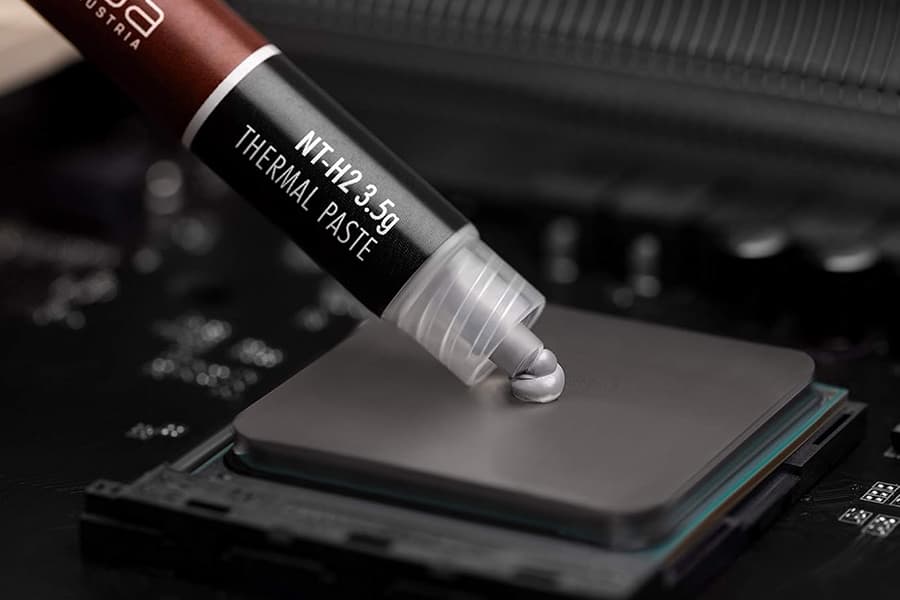
Performance comparison NT-H1 vs. NT-H2
The NT-H2 thermal paste further improves on the award-winning NT-H1. But how much of a difference in performance can you expect to see?
How to speed up the activation phase of the NT-CP1 thermal pad using automated Prime95 runs
The NT-CP1 thermal pad does not require any manual activation. However, it is possible to speed up the activation phase through dedicated thermal cycling...

NT-CP1: Performance characteristics and technical background
The Carbice® NT-CP1 carbon nanotube thermal pad improves over thousands of thermal cycles instead of degrading like pastes, ideal for long-lasting, maintenance-free use.